Embracing a Vacation Alone
— Hi, Olenka! Listen, I have a favor to ask of you! — The voice of my sister-in-law Marina rang with exaggerated enthusiasm, something I had learned to associate with burdensome requests.
— Hi, Marina. I’m listening, — I replied, pushing away a stack of dusty archive folders. The smell of old paper had become my usual work environment.
— You’re going to the sea soon, right? To that… boarding house? — Marina babbled. — You’re going alone, if I remember correctly?
— Just me, — I confirmed, a chill of dreadful foreboding running down my spine. I had been looking forward to this vacation for so long. Not just looking forward to it — I had endured it, saving up every penny from my salary as a librarian, denying myself small indulgences. Two weeks of tranquility, salty air, and freedom from responsibilities — that was my dream, my personal Everest that I had been climbing all year long.
— Listen, Olya, take my kids with you! Pasha and Lenka. Pretty please? It would be so good for them! The doctors say the sea is the best medicine for immunity. Being with us hasn’t worked out this year, as you know; Vitya is swamped with work, and I can’t handle them alone, — Marina spilled out in one breath.
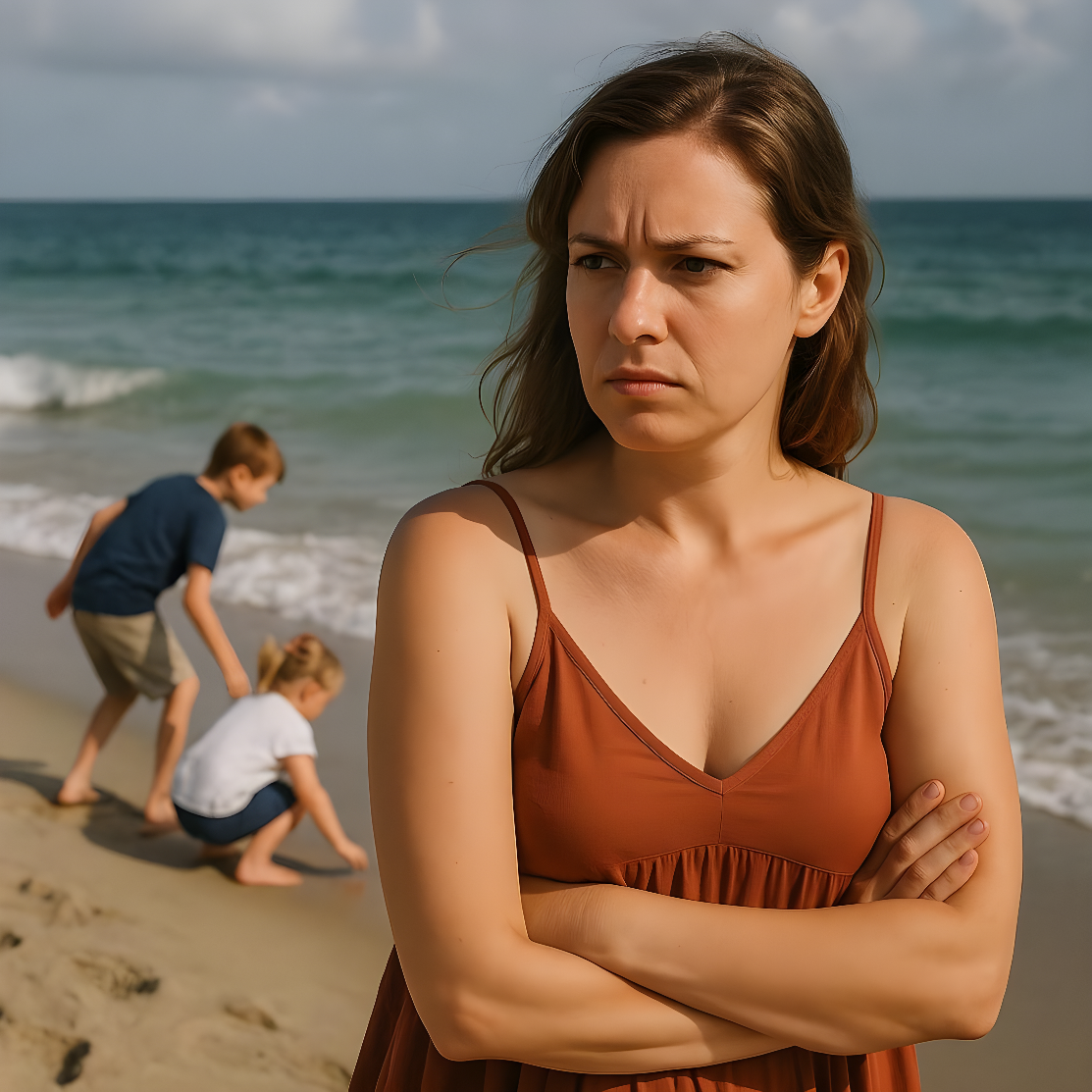
I fell silent, gazing out the window at the gray wall of the neighboring building. I envisioned that ‘vacation.’ Endless calls of “Aunt Olya, buy this!” “Pasha just covered me with sand!” “I don’t want this porridge!” “When will we go on the rides?” Instead of the sound of waves, there would be squeals and disputes. Instead of reading on a sunbed, I would be vigilantly supervising two unruly forces in the water. Instead of peaceful dinners, I would be trying to feed two picky eaters.
— No, — I said quietly but firmly.
— What do you mean “no”? — Marina’s voice showed confusion. — Olya, you don’t understand. I’m not asking you to pay for them! We’ll cover everything, tickets included, and we’ll even give you spending money. You’ll just need to keep an eye on them. You’ll be bored alone! They’ll bring fun!
“Fun,” — I repeated mentally. In Marina’s context, this word meant chaos, destruction, and complete loss of personal space.
— Marina, I’m going to relax. Alone. I want to be by myself. So, I won’t take the children.
There was a deafening silence on the line. I could almost feel the emotions switching on my sister-in-law’s face from confusion to hurt, then righteous indignation.
— So… you are refusing your own nieces and nephews? Your family? — Marina’s voice trembled. — I thought we were close. I’m reaching out for help with all my heart, and you… I’m not sending them to the end of the world! Olya, do you even hear yourself? This is pure selfishness! You have none of your own; you don’t know what it’s like!
The last remark felt like a punch below the belt, familiar yet just as painful. Yes, my husband Igor and I had no children. Years of trying, doctors, hopes, and disappointments had burned a huge hole in my soul, which I had learned to cover with calm and work. And my in-laws, especially Marina and my mother-in-law, regularly poked at this sore spot, as if checking whether it had healed.
— Marina, my decision remains unchanged. I’m going to the sea alone, and I don’t need you imposing your kids on me. Sorry, but I have a lot of work to do. — I pressed the disconnect button before another wave of accusations could wash over me.
My heart raced, and my hands trembled slightly. I took several deep breaths, attempting to calm the storm inside me. I knew this was only the beginning. The phone call was merely the first shot in a war that had just been declared on me.
Later that evening, when Igor returned home from work, I already sensed he was aware. He walked into the kitchen with a demeanor as if burdened by the weight of the universe’s sorrow. Igor was an engineer at a factory, a solid and composed person, but he hated conflict — especially family disputes. He would bend over backward to maintain peace at home.
— Mom called, — he said instead of a greeting, sitting down at the table.
I silently placed a plate of buckwheat and cutlet in front of him. I didn’t ask what Mom said; I already knew.
— Olya, maybe you overreacted? — he began cautiously, poking his fork into the plate. — It’s family after all, and Marina says they dreamt of going to the sea.
— Igor, we’ve been through this already, — I replied wearily, seating myself across from him. — Remember last New Year? “Olenka, can you sit with them for an hour? We’re just going for a visit.” And where were you? You returned at four in the morning while I spent the night breaking up fights between Pasha and Lenka, washing juice off the carpet, and listening to their whining. What about the May holidays? “Olenka, take them to the dacha for some fresh air.” And how did that end? With a broken apple tree that your father planted and complaints from neighbors about them trampling all the tulips.
Igor sat there quietly, looking guilty. It was all true. His niece and nephew were energetic kids whose parents, Marina and Viktor, had either no interest in or capacity for parenting, offloading the duty onto anyone nearby. And I was often the unquestioning Aunt Olya.
— But it’s a vacation… — he mumbled. — Two weeks. Maybe they’ll be calmer at the sea?
— Igor, I’ve saved for this vacation for a year. A YEAR! I want to lie on the beach listening to the sea, not to screams. I want to sleep in till noon, not jump up at seven to take someone to breakfast. I want to go on an excursion in the mountains, not to the dolphinarium for the tenth time. This is my vacation. Mine. Not ours with your nieces. Why can’t anyone understand that?
— Mom says you’re distancing yourself from family, — Igor sighed. — That since we… well… — he hesitated, — you should help those who have kids.
An anger stirred within me again, a deep-seated rage. This accusation, wrapped in false concern, hit me hard.
— But your mom never mentions why Marina, with her two kids, has never offered to help me? When I had pneumonia, who brought me broth? My colleague, pensioner Anna Lvovna. Where was your caring sister? She called to ask if I could check Pasha’s homework over Skype because she was “too busy.” When our car broke down and we needed money for repairs, who lent us some? My father. And your brother Viktor said they have a “mortgage and it’s tough right now.” They remember we’re family only when they need something from me. And I’m tired, Igor. Dead tired.
I spoke softly, almost unemotionally, but each word was charged with bitterness accumulated over the years. Igor looked up at me. His expression showed not anger but confusion. He loved me, but he was also a product of his family, where “to yield”, “to understand the situation”, and “to avoid causing issues” were esteemed virtues.
— I understand, — he finally said. — You’re right. It’s just… it will cause a scandal.
— Let there be a scandal, — I cut in. — I no longer want to live where everyone else is comfortable, except me.
Just then, the phone on the hallway table rang again. Based on its insistence, it must have been my mother-in-law, Svetlana Ivanovna, launching an all-out offensive. Igor flinched. I got up, walked to the phone, and simply unplugged it.
— Today, we’re taking a break from relatives, — I said and returned to the table. — Eat while it’s still warm.
Igor looked at me, at my drawn, determined face, and for the first time in a long time, he saw not the quiet, docile Olya but a strong, unfamiliar woman. And oddly enough, he liked this Olya much more.
The following days turned into a positional war. Marina stopped calling, but she began flooding the family chat with photos of her “poor pale kids,” deprived of summer healing. Svetlana Ivanovna, realizing that direct calls were being ignored, switched tactics to visits.
She showed up at the door on Saturday morning, unannounced, a bag containing a jar of jam — her unchanged attribute of “courtesy visits,” which always ended with a moral thrashing.
— Olenka, I was just passing by, thought I’d drop in, — she chirped, moving into the apartment. — Is Igor at work? Good, we need to talk woman to woman.
I silently led her to the kitchen, knowing an escape was unlikely.
— I brought you some raspberry jam; it helps with colds, — my mother-in-law began, setting the jar on the table. — Since the sea isn’t in your cards, you might as well stock up on vitamins.
The jab was too obvious to respond to. I simply put the kettle on.
— Olya, I don’t understand your stubbornness, — Svetlana Ivanovna began without further preamble, her tone shifting from honeyed to strict. — What kind of pride are you displaying? Marina is your husband’s sister. Her children are your blood. How can you deny them this little thing?
— Svetlana Ivanovna, this is not a little thing for me, — I replied calmly, as I retrieved cups. — This is the only vacation I’ve had in several years, and I want to spend it in silence.
— In silence! — my mother-in-law scoffed. — A newfound value indeed. You’ve got plenty of silence as it is. The entire apartment rings with it. No kids, no worries. Just live and enjoy. Others your age are already babysitting grandchildren, and you turn up your nose at your own nephews. It’s not nice, Olya. It’s selfish. God sees everything. He doesn’t give children to those like you because you lack heart.

I froze with the kettle in my hands. The air in the kitchen became thick and sticky. The last remark was a frontal assault, pulling the ground out from under me. This was an unprecedented, monstrous cruelty, articulated as if by a preacher steering a lost soul back to the righteous path.
I slowly set the kettle down. I turned to my mother-in-law, my face pale but my eyes steady and cold.
— Please leave, — I said very quietly.
— What? — Svetlana Ivanovna was taken aback, not expecting such a response. She was used to Olya crying or retreating into herself after her admonishments.
— Get out. From my house. Right now.
— How dare you! — my mother-in-law erupted, her cheeks flushed crimson. — You’re throwing out your husband’s mother? How could you…
— You came to my home and insulted me in the most demeaning way possible, — my voice was growing stronger. — You’ve been hurting me for years, under the guise of caring for family. I’ve endured it. But there’s a limit to everything. My limit has been reached. Take your jam and leave. Don’t come back without an invitation.
Svetlana Ivanovna stood frozen, mouth agape. She looked at me as if I were a specter. She had never seen me like this before. In her mind, the quiet, apologetic daughter-in-law could never speak like this.
— I’ll tell Igor everything! — she finally stammered, grabbing her bag from the table. — He will know how his mother is treated! Let’s see what he says!
— Please do let him know, — I nodded, opening the entry door for her. — Just don’t forget to mention why I asked you to leave. Goodbye, Svetlana Ivanovna.
As I slammed the door behind my mother-in-law, I trembled. I slid down the wall in the hallway and cried silently. These weren’t tears of hurt; they were tears of liberation. I had broken the dam that had held my emotions back for years. And let the flood come; I didn’t care anymore.
Igor returned home looking gloomier than a thundercloud. He had evidently had a stormy conversation with his mother. I waited for him in the kitchen, bracing for the worst. I mentally sorted through scenarios: he would demand apologies, side with his mother, say I was tearing the family apart.
He walked in, dropped his keys on the table, and went to the kitchen. He sat across from me, staring at one spot in silence.
— Mom said you kicked her out, — he finally spoke hoarsely.
— I asked her to leave, — I corrected. — After she claimed God doesn’t give me children because I lack heart.
Igor flinched and looked at me. Pain swelled in his eyes.
— She… really said that?
— Word for word, — I confirmed. — And it wasn’t said in the heat of the moment. It was uttered coldly, like a diagnosis. A verdict. And do you know what’s most horrifying, Igor? I think she truly believes it. And Marina believes it too. They all think I’m somehow defective, broken. Since I haven’t fulfilled my “primary feminine function,” they reckon I must serve their interests. Be a free babysitter, an ATM, a shoulder to cry on. And I’m not allowed to have my own opinions or desires.
I spoke, and the words that I had been afraid to articulate even to myself flowed freely and effortlessly. I could see Igor’s expression changing. Confusion shifted to shame, and then to anger. But this anger was directed not at me.
— I’ll talk to them, — he said firmly, fists clenched. — I’ll go to them tomorrow. Both to Mom and Marina.
— Don’t, Igor. It won’t change anything. They won’t understand. They’ll just believe that I turned you against them.
— Let them think what they want! — he slammed the palm of his hand on the table. — But they have no right to speak to you like that! No one has the right! I… I should have done this sooner. A long time ago. I’ve been trying to be good for everyone. A good son, a good brother. And in the end, I became a bad husband. I’m sorry, Olya.
He got up, approached me, and embraced me tightly, as if fearing I might crumble into pieces. And I understood that this scandal, this storm I had stirred up was necessary not only for me; it was essential for him too. To finally wake up and see what was happening to our lives, to our family.
The next day, Igor indeed went to visit his relatives. I had no clue about their conversation. When he returned, he looked tired but at peace.
— I told them that if they don’t stop, they will no longer be part of our family, — he reported briefly. — And that you’re going to the sea alone, and that’s final.
The phone was silent. The family chat fell quiet too. A deafening, tense silence descended.
A week before the vacation, something unexpected happened. Viktor, Marina’s husband, called. His voice was embarrassed and a bit frantic.
— Olya, hello. Sorry to bother you, — he began. — We need to talk. With both of you. It’s important.
We met at a café. Marina sat there with a stone face, staring into a cup of cold coffee. Viktor looked terrible. He was pale, with dark circles under his eyes.
— In short, — he started without looking up. — It’s not just about the vacation. More precisely, it’s not about it at all. I have problems. Big ones.
He told us how several months ago he had gotten involved with dubious people, investing a hefty sum of money in a “high-yield project” that turned out to be just a Ponzi scheme. Not only did he lose all their savings, but he also went into massive debt at high interest. Now these people were demanding their money back — with threats.
— Marina wanted to send the kids to you not just for fun, — Viktor continued drearily. — We were scared. We’re afraid for them. We thought at least they’d be safe. As for the money for their tickets… we wanted to take from what little was left, just to create an appearance that everything is fine.
Marina sat still. There was no trace of her usual arrogance. Only fear and despair.
— Why didn’t you tell us sooner? — Igor asked.
— I was ashamed, — Viktor squeezed out. — I thought I’d manage on my own. I didn’t manage. They gave me two weeks. If I don’t pay back, they promised… well, you can guess.
I looked at them, feeling no schadenfreude. Instead, a strange, cold emptiness settled in me. This whole story about the sea, all these manipulations and insults had been merely a smokescreen, covering someone else’s foolishness and lies.
— How much do you need? — I asked.
Viktor named a sum. My jaw dropped mentally. It was three times the cost of my vacation. It was all the savings that I had set aside with Igor for a “rainy day” over the years.
— We’ll sell the car, — Marina said quietly, finally breaking her silence. — But that won’t be enough. You can’t sell a property quickly… Olya, Igor… I know, I’ve behaved horrendously. Forgive me. But I’m panicking. I don’t know what to do.
We sat together at the table in the nearly empty café, four people bound by kinship and shared misfortune. Yet I felt like an outsider amid their despair. My resentment hadn’t vanished; it was merely overshadowed by someone else’s, more significant catastrophe.
That evening, Igor and I sat in the kitchen for a long time.
— We need to help them, — he said. — This is my sister. And the children… they’re not at fault.
— We don’t have that kind of money, — I replied. — Or rather, we do. But it’s all we have. And if we give it away, we’ll be left with nothing.
— I know. But how else?
I stared out the window into the night city. My vacation, my hard-won sea, my two weeks of peace… all of it now felt so distant and insignificant against the looming real threat facing my husband’s family. But something within me resisted. That new, solid part of me I had discovered on the day of the row with my mother-in-law.
— Igor, — I said slowly, choosing my words carefully. — I understand your desire to help. But let’s look at this soberly. Viktor got into this mess because of his foolishness and greed. Marina was covering for him, trying to solve the issue at my expense, manipulating and insulting me. If we hand over all our money now, what will happen next? They’ll think they can do this anytime. That we’re their safety net always within reach.
— But what do you suggest? Abandon them?
— No. Not abandon. But we shouldn’t solve all their problems for them. They’re selling the car. That’s good. Let them do that. Viktor has a garage that belonged to his father. Let him sell that too. Marina has gold jewelry gifted to her on all occasions. Let her take it to the pawn shop. Yes, they will lose their comfort. Yes, they’ll have to tighten their belts. But it will be their lesson. Harsh but fair.
I spoke, and Igor listened, frowning. He saw the logic in my words but found it hard to accept.
— What if it’s not enough for them? — he asked.
— Then, — I paused. — Then we’ll lend them the missing amount. Not a gift, but a loan. Documented. With a clear repayment schedule. Let it be little by little, a thousand a month. But they must return every ruble. So they can realize the value of money. And the price of their mistakes.
Igor was silent for a long time. He paced the kitchen from corner to corner. Then he stopped and looked at me.
— And your vacation? — he asked.
— My vacation will happen, — I declared confidently. — I won’t touch my money for it. This is not up for discussion. It’s mine. And I’ve earned it.
Viktor and Marina accepted our terms. They were demoralized and humiliated but had no choice. Over the week, they sold everything they could: the car, the garage, Marina’s precious jewels. The amount collected was still significant but still insufficient. Igor and I loaned them the remainder, everything documented by a notary. Marina didn’t lift her eyes while signing the note.
The day before my departure, I was packing my suitcase. The apartment was silent. The phone had been silent for two weeks. After learning about their son-in-law’s debt, Svetlana Ivanovna fell ill with high blood pressure, cutting off all communication. Marina was consumed with her problems.
When my suitcase was nearly packed, the doorbell rang. Standing on the doorstep was Marina. Alone. She looked thinner and more tired.
— I… just a minute, — she said, hesitating to enter. — I came to say… thank you. And… I’m sorry. For everything. I was foolish.
I looked at her, not knowing how to respond. The word “sorry” was spoken, but something held me back from accepting it. Too much had been said and done. The wound was too deep.
— I hope everything works out for you, — I replied instead. It was a polite but distant phrase. A phrase for a stranger.
Marina nodded.
— Wishing you a lovely vacation, — she said and quickly turned to go down the stairs.
I closed the door. I felt neither joy nor relief. Only bitterness and exhaustion. I understood that things would never be as they were. A crack had formed between us that no apology could heal. My husband’s family, once perceived as a united, monolithic clan, was, in fact, a tangle of contradictions, grievances, and selfishness. And I, Olya, no longer wanted to be a part of this.
The next day, I sat in a train carriage, heading south. Fields, forests, and small stations drifted past the window. I took out a book but didn’t read it. I looked out the window, lost in thought. I pondered that sometimes, to save oneself, one must dismantle the world around them. Or at least that world that suffocates you.
Two days later, I sent Igor a picture. A deserted beach at dawn, turquoise sea, and my bare feet on wet sand. The caption was short: “It’s quiet here.”
Igor looked at the photo and smiled. He understood that his wife hadn’t just gone on vacation. She had gone to find herself. And he was certain that she would discover herself. And they would manage together moving forward. But according to new rules. Her rules. And that felt just right.